Wednesday, June 10, 2026

Summer Travel Plans? Check Out these Tips for a Safe, Enjoyable Trip


Traveling opens the door to exciting experiences, but it can also expose you to new germs and unfamiliar environments. Health issues such as animal bites or food poisoning can quickly derail a trip, turning a vacation into days of recovery or even an emergency room visit.

Use these healthy travel tips to lower your risk of getting sick and make the most of your trip—from managing jet lag to handling a bad sunburn.

"Plan ahead. Are vaccinations recommended for your destination? Precautions against food or mosquito-borne infections? Preparing in advance will help you spend your time enjoying your trip and not dealing with unexpected illness,” Henry Wu, infectious disease specialist, told Emory Health News.

1. Plan ahead: Know your destination’s health risks

Check whether your destination calls for vaccinations or precautions against foodborne or mosquito-borne illness so you can spend your trip enjoying yourself, not recovering from something preventable.

One basic line of defense is staying current on your flu and COVID vaccines. These are among the most common illnesses during travel, and even healthy travelers may want to avoid getting sick on vacation or bringing illness to the people they visit.

Different destinations carry different risks, so it helps to know what to expect. The CDC’s Travelers' Health tool is a useful resource for researching common illnesses and recommended vaccines by destination.

 Wu notes that immigrants returning to their countries of origin may assume they are still immune to local diseases, but immunity can fade after living in the U.S. Checking with a health care provider before traveling is still important.

2. Pack smart: Create an on-the-go health arsenal 

As with toiletries, don’t leave home without a well-stocked travel health kit. Essentials include:

  • Hand sanitizer: A travel-sized bottle of alcohol-based sanitizer is your best friend for frequent use, especially when soap and water aren't readily available.

  • Any personal medications: Keep them in their original packaging with a copy of your prescription.

  • Pain relievers and fever reducers: If you often catch a cold while traveling, decongestants and cough suppressants may also be worth packing.

  • Antacids and anti-diarrheal medication: Travelers’ diarrhea is so common it has a name. Be prepared for potential digestive issues.

  • Motion sickness remedies: If you're prone to it, pack medication or acupressure bands.

  • Insect repellent: “Mosquito-borne infections like dengue are surging,” warns Wu. Protect yourself from bug bites by packing a bug spray.
  •  Sunscreen and lip balm with SPF: Protect yourself from harmful UV rays, no matter the climate. Going somewhere extra sunny? Pack hats and long sleeves.

  • Basic first aid: It's always a good idea to have some basic first-aid items on hand, especially if you plan to be hiking or spending time outdoors.

 Wu also recommends carrying a face mask for crowded indoor spaces with poor ventilation, since masking can help reduce respiratory infections—some of the most common illnesses among travelers.

3. Prioritize hygiene: Your first line of defense

Frequent handwashing is one of the best ways to prevent illness while traveling. Wash with soap and water for at least 20 seconds, especially before eating and after time in public places. If soap and water aren’t available, use an alcohol-based hand sanitizer.

Also try not to touch your face—especially your eyes, nose, and mouth—which is an easy way to pick up germs.

4. Consume with care: Mealtime health concerns 

Trying local food is one of the joys of travel, but food- and waterborne illnesses are common, especially in places with limited resources.

Illness can happen when food or drinks are contaminated with bacteria, whether from undercooked meat or poor hygiene practices. Unfortunately, it can be relatively easy to get sick.

Taking these steps can help reduce some of the risk:

  • Drink safe water: If you know the tap water is not safe where you're visiting, opt for bottled water or water that has been properly treated (boiled, filtered or chemically disinfected). Avoid ice unless you're certain it's made from safe water. Brush your teeth with bottled water.

  • Consider your dining options: When possible, avoid raw or undercooked meats, seafood and eggs, which are known to cause more frequent infection. Hot, freshly cooked food is often safer. Always consider the food handling and hygiene at restaurants and street vendors — if food is sitting out at room temperature for long periods, avoid it.

  • Wash fruits and vegetables: If you're eating raw produce, wash it thoroughly with safe water. Thick-skinned fruits that you can wash and peel yourself are often the safest choice. 

5. Pace yourself: Prioritize rest

One of the easiest ways to get sick while traveling is to overdo it. Getting enough sleep supports your immune system and helps you stay well.

To reduce jet lag, adjust to your new time zone as quickly as possible and spend time outdoors, since daylight helps your body adapt.

6. Know what to do

Sometimes, despite good planning, travel health problems still happen.

 Wu says injuries are common during travel and can be more dangerous than infections. Travelers may take bigger risks abroad, often where safety standards and emergency care are more limited.

His advice: use common sense. Skip activities that don’t look safe or that you wouldn’t do at home. If you aren’t an experienced motorcyclist or strong swimmer, travel isn’t the time to take unnecessary risks.

Here’s what to do if you get some common travel health issues:

  • Injury: One of the most common injuries when traveling internationally is motor vehicle accidents. Know your local hospitals and follow law enforcement's directions.

  • Food poisoning or travelers’ diarrhea: Stay hydrated with frequent sips of fluids. Eat plain foods like bananas and rice, and get lots of rest. Seek medical attention if you experience any of the following symptoms: bloody diarrhea, fever, severe nausea or vomiting, and dehydration.

  • Sunburn: Apply aloe and take over-the-counter inflammatory medication such as ibuprofen. Remain out of the sun. Seek medical attention if you develop large blisters, show signs of infection or experience worsening pain.

  •  Animal bites: Avoid contact with stray and wild animals, even if they look healthy. Any animal bite or scratch should be washed immediately, then seek immediate medical attention to determine whether or not rabies post-exposure treatment is needed. 

7. Listen to your body and seek help when needed

Pay attention to unusual symptoms while traveling and don’t assume they’ll go away on their own. If you feel unwell, get medical care promptly.

Despite the risks, travel also offers real health benefits. Wu says exploring new places can inspire healthier habits, build confidence, and create new social connections. Seeing how other cultures live can also broaden your perspective and deepen your appreciation for home.

Staying healthy while traveling is a proactive process. By following these healthy travel tips, you can significantly reduce your risk of getting sick and enjoy a healthier, happier journey. Safe travels!

What You Need to Know about Oil Changes


Wednesday, June 3, 2026

2026 Mitsubishi Outlander: New Features Add Extra Value


  • Mitsubishi is one of those car brands you might need to be reminded, periodically, still exists. But it's still kicking. With a scaled down vehicle lineup, you can still find a few of the Japanese brand's products out there, including this week's tester, the Outlander. 
  • It features a minimal fuel-economy increase, and better in-town drivability, but overall not much has changed. Mitsubishi put some of its limited marketing muscle behind Outlander, which has received a mild refresh consisting primarily of suspension and cabin tweaks. But the biggest change is the new hybrid powertrain that now comes standard.

The former naturally aspirated 2.5-liter four-cylinder engine is replaced by a new turbocharged 1.5-liter four-cylinder with hybrid assistance. It loses 7 hp, so it now has 174 horsepower, but the hybrid makes 206 pounds-feet of torque, a gain of 25.

There are the ES and SE trim levels, a top-of-the-line SEL Black Edition and a sporty Ralliart trim. Pricing is as follows: 

  • ES: $31,965
  • SE: $36,315
  • SEL: $41,015
  • Trail Edition: $41,615

The entry-level Outlander ES has standard 18-inch alloy wheels and LED headlights and taillights. Inside, you’ll find manually adjustable front seats, cloth upholstery, push-button start and dual zone climate control. Tech features include an eight-speaker audio system and a 12.3-inch touchscreen with navigation and Apple CarPlay and Android Auto. Optional are all-wheel drive and headlight washers, windshield-wiper de-icers and heated front seats. 

Standard safety gear for the 2026 Outlander includes forward collision warning with pedestrian detection, automatic emergency braking, blind spot monitors, rear cross-traffic alert, a driver-attention monitor, automatic high beams and rear parking sensors.

The SE includes 20-inch wheels, LED foglights, rain-sensing windshield wipers, a power liftgate and keyless entry. Inside, the SE has a power-adjustable driver’s seat, synthetic suede upholstery, heated front seats, a heated steering wheel, a 360-degree camera system and wireless phone charging. Headlight washers and windshield-wiper de-icers are also included with AWD on the SE and SEL, and they come standard on the Trail Edition.

Based on the SE, the Trail Edition wears black lower-body cladding as well as black 18-inch wheels, mirror housings and roof rails. It also features mud flaps, a black hood decal, dark-chrome window trim and a spoiler. Only available with AWD, the Trail Edition also includes a panoramic moonroof.

The SEL forgoes the Trail Edition’s black exterior trim but keeps the moonroof and tech upgrades. It also gains a 12.3-inch digital instrument cluster, leather upholstery, a power front-passenger seat, ventilated front seats, heated rear seats, tri-zone automatic climate control and rear window shades. The Trail Edition and SEL also add lane-centering steering, navigation-linked adaptive cruise control with stop-and-go, road-sign recognition and front parking sensors.

The new hybrid powertrain is standard on 2026 Outlanders. It’s mated with a continuously variable automatic transmission. Front-wheel drive is standard on the ES, SE and SEL; AWD is a $1,800 option on the ES, SE and SEL and standard on the Trail Edition.

With FWD, Mitsubishi says the 2026 Outlander returns an estimated 26/31/28 mpg city/highway/combined; the AWD Outlander is rated at 26/30/27 mpg (official EPA ratings for the 2026 model are not yet available). Those are minimal increases from the prior model's 24/31/27 mpg with FWD and 24/30/26 mpg with AWD, but the increased low-end torque should make the updated Outlander more responsive in low-speed, around-town driving.

Thursday, April 9, 2026

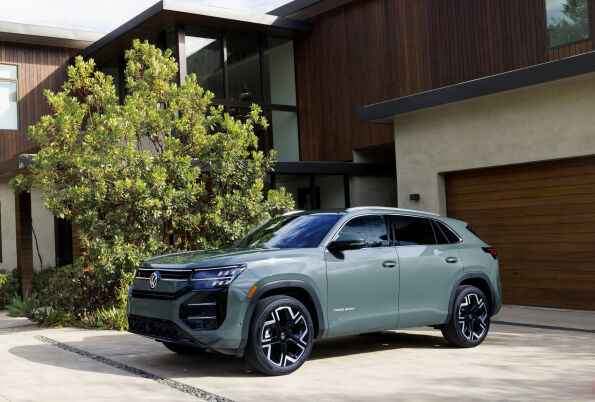
2026 Toyota Venza: Style, Efficiency and Comfort


The 2026 Toyota Venza is a hybrid SUV that blends style, efficiency and comfort.

 It features a 2.5-liter hybrid engine delivering 219 horsepower, offering smooth performance and excellent fuel economy. The Venza's design is sleek and modern, with soft body lines and a premium yet understated aesthetic.

Inside, the cabin is spacious and quiet, with high-quality materials and features like a large touchscreen, Apple CarPlay, Android Auto, dual-zone climate control and optional panoramic sunroof.

 The seats are supportive, making long drives comfortable. 

Safety is a priority, with Toyota Safety Sense 3.0 providing adaptive cruise control, lane departure alert, and pre-collision systems.

The Venza is available in trims like LE, XLE, Limited and Platinum, catering to various needs from daily commutes to luxury experiences. It’s a practical choice for eco-conscious drivers and families seeking a reliable, stylish hybrid SUV.

The Venza starts at around $35,000 and ranges to around $44,000.


Tuesday, March 31, 2026

2026 Toyota Highlander: Strong Entrant in SUV Market


 The 2026 Toyota Highlander is a solid contender in the midsize SUV market, offering a blend of comfort, practicality and modern features. Its standout qualities include a smooth ride, a spacious cabin for up to eight passengers and a suite of advanced safety features. The 2.4L turbocharged engine delivers 265 horsepower, paired with an 8-speed automatic transmission and standard all-wheel drive, ensuring a confident driving experience. For those prioritizing efficiency, the hybrid model achieves up to 35 mpg combined.

Inside, the Highlander impresses with its optional 12.3-inch touchscreen, wireless Apple CarPlay and Android Auto, and available leather-trimmed seats. However, the third row remains cramped, making it better suited for children. Cargo space is adequate but not class-leading, with 16 cubic feet behind the third row and up to 84 cubic feet with all seats folded.

While the Highlander excels in comfort and reliability, it faces stiff competition from rivals like the Kia Telluride and Hyundai Palisade, which offer more engaging designs and slightly better value. Starting at $47,840, the Highlander is a dependable choice for families, though it may not excite those seeking a more dynamic or luxurious ride.


Thursday, March 19, 2026

2026 Toyota Tundra: Formidable Presence in the Truck Market


The 2026 Toyota Tundra is a solid contender in the full-size truck market, offering a mix of modern features and reliable performance. It comes equipped with a twin-turbo V6 engine, available in both standard and hybrid configurations. The hybrid version delivers an impressive 437 horsepower and 583 lb-ft of torque, making it a strong choice for towing and hauling. However, its maximum towing capacity of 12,000 pounds falls short compared to competitors like the Ford F-150 and Chevrolet Silverado.

The Tundra's ride quality benefits from a coil-spring rear suspension, providing a smoother experience than traditional leaf springs. Inside, the cabin is spacious and functional, with an optional 14-inch touchscreen that stands out for its crisp graphics and user-friendly interface. While the interior design is practical, it lacks the luxury feel of some rivals, and certain materials feel less premium.

Fuel economy is a mixed bag, with the hybrid achieving up to 20 mpg combined, which is competitive but not groundbreaking. Safety features are robust, including Toyota Safety Sense 2.5, which offers adaptive cruise control, lane-keeping assist, and more.

On the downside, the Tundra has faced reliability concerns, particularly with its twin-turbo V6 engine in earlier models. While Toyota has addressed these issues, some buyers may remain cautious. Additionally, the truck's real-world fuel economy and towing capabilities leave room for improvement.

Pricing starts at around $42,000 and ranges as high as $80,000.

Overall, the 2026 Toyota Tundra is a capable and comfortable truck that excels in daily usability and tech features but lags behind in towing and luxury compared to its peers. It’s a great option for those prioritizing reliability and practicality over outright performance.

Tuesday, February 10, 2026

Vehicle Tips for Making It through the Last of Winter


There are still a few weeks of winter left for most areas of the Northern hemisphere, so with that in mind, it's still a good idea to keep your car winter-ready for awhile longer. Here are our 10 tips to make sure your vehicle can withstand winter's challenges.

1. Be sure your car battery is fully charged

Cold weather can lessen the effectiveness of your car's battery. An already old or weak battery can quickly die when temperatures drop. We recommend having the health of your battery tested by a professional.

2. Invest in new tires

Winter tires can help keep you and your family safe. They maintain better traction and control while driving through ice and snow. We also recommend checking your tire pressure more often during the winter.

3. Test out your heater and defroster

Before temperatures drop, make sure your car heater and defroster are functioning properly. Heating your car is essential for winter driving and without a working defroster, clearing ice off your windshield can be difficult and time-consuming.

4. Get an oil change

Did you know that motor oil can thicken in the cold? A multi-viscosity oil is recommended for the winter. Regular oil changes also prevent old oil from damaging your motor.

5. Keep your gas tank full

To prevent your fuel lines from freezing and moisture from developing inside your tank, keep your gas tank as full as possible throughout the winter season to make sure your fuel system is performing properly.

6. Maintain Anti-Freeze/Coolant Levels

Anti-Freeze keeps liquid in your engine from freezing when the temperature drops. We recommend checking your anti-freeze levels this winter and replenishing if needed.

7. Check your Engine Hoses

Make sure your engine hoses are fully functioning for winter. Check for leaks and cracks and replace any hoses that are brittle or spongy.

8. Check your windshield wiper blades and washer solvent

To guarantee that your windshield wipers can properly clear snow this winter, check to make sure no streaks or spots are left behind when you use your wipers and replace them if needed. Winter wiper blades are also a great option if you live in an area where heavy snow is common.

9. Check Your Headlights

With the sun setting earlier and the potential for snow in the forecast, driving with low-functioning headlights can be dangerous. Change the bulbs in your headlights to guarantee as much illumination as possible. Check to make sure your headlight lenses are clear and clean. If you have cloudy lenses, we recommend a headlight restoration service.

10. Stick to a preventative car maintenance schedule

All of the problems mentioned above can be avoided by practicing preventative maintenance. A technician can check for any potential issues that could arise during the winter and help prevent them.